
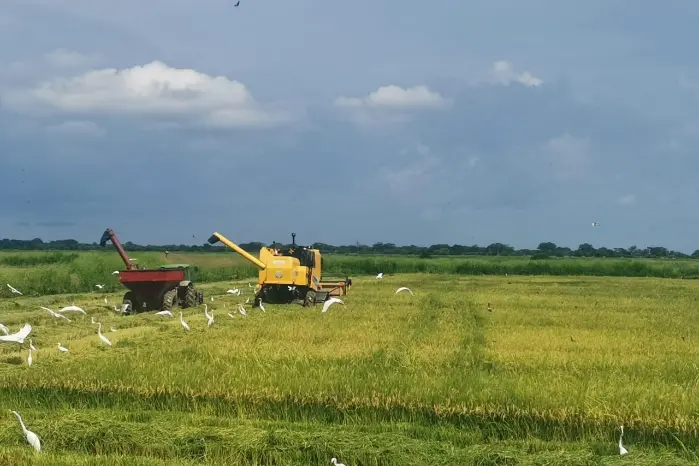
The Panama rice agribusiness represents a foundational pillar for the country’s rural stability and financial future. Rice serves as the absolute staple of the national diet, meaning its production directly impacts millions of citizens daily. Consequently, local authorities and private investors are prioritizing this strategic sector to ensure market resilience. By strengthening the Panama rice industry, the nation safely constructs a solid foundation for continuous progress.
Protecting National Food Security in Turbulent Times
First and foremost, the local cultivation of grain guarantees reliable national food security. Relying too heavily on international imports frequently exposes local consumers to unpredictable global price spikes and shipping delays. However, maintaining a robust domestic food sovereignty framework allows the country to remain self-sufficient during international supply crises. Therefore, expanding agricultural production directly safeguards the food supply safety of vulnerable populations across all provinces.
Driving Sustainable Economic Development in Rural Areas
Furthermore, the modernization of this sector actively drives sustainable economic development. By transforming traditional fields into eco-friendly operations, farmers can significantly reduce water consumption and chemical usage. This conscious shift toward green financial growth protects valuable water resources while increasing crop yields. As a result, the industry proves that environmental responsibility can successfully coexist with corporate profitability.
Accelerating Rural Employment Generation
Beyond environmental factors, the grain agricultural sector remains an unmatched engine for rural employment generation. Thousands of families in provinces like Chiriquí, Coclé, and Veraguas rely entirely on countryside job creation for their primary income. From planting seeds to managing advanced milling facilities, the industry provides vital regional employment opportunities. This consistent financial activity effectively prevents mass migration to overcrowded urban areas, keeping local communities vibrant.
Embracing Agricultural Modern Technologies
Ultimately, the future of local rice farming depends on the rapid adoption of agricultural modern technologies. Implementing smart farming tools, such as precision drone mapping and automated irrigation monitors, maximizes efficiency. These advanced cultivation techniques allow smallholders to produce more grain per hectare while minimizing manual labor strain. By embracing these innovative systems, Panama successfully secures its agricultural sovereignty for the next generation.