
Paula Rosenblum is a contributor for Forbes who writes how the Panama Canal expansion is so needed right now.
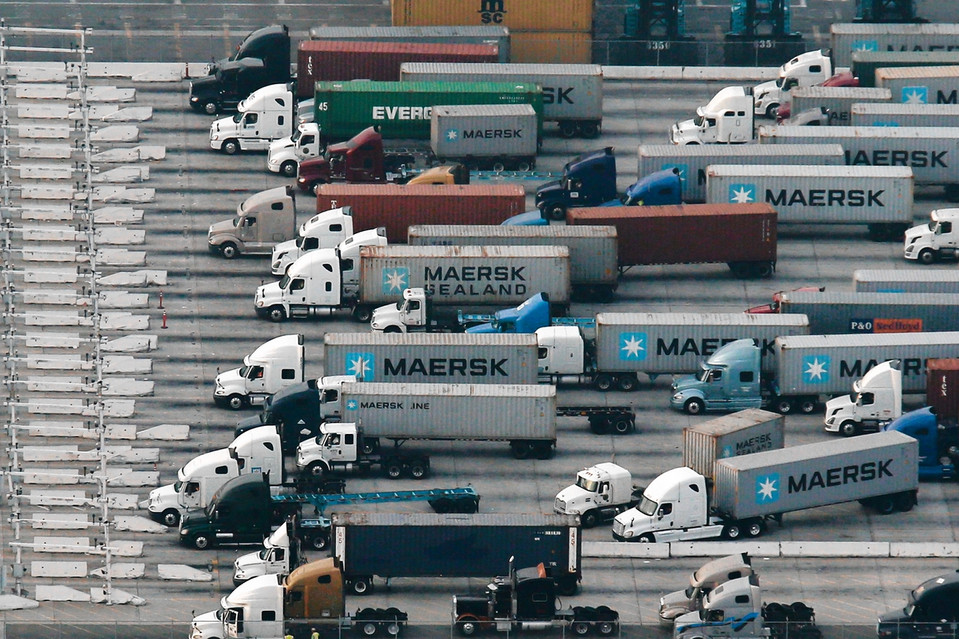
Macy’s is the most recent retailer to have its results impacted by the West Coast port dispute. This may seem like a transient, one time problem, but the truth is, even on a good day the West Coast ports are bottlenecks that slow the flow of goods from the point of production in the Far East to the point of demand somewhere in the U.S. They’re just too busy.
Back in February, Michael Kors CEO John Idol cited the risk on the company’s third quarter conference call. He said: “The port congestion on the West Coast continues to pose a risk to incoming shipments.” Ralph Lauren CFO Christopher Peterson talked about air freighting product or receiving it on the East Coast instead.
Of course, retail isn’t the only industry impacted. Automakers and other manufacturers rely on parts and products coming from China, Japan and other Asian countries for their finished goods supply. Unfortunately negotiations between union workers and Port authorities have devolved into periodic games of “chicken,” where dock workers either threaten to strike, execute slowdowns, or really do strike. This ripples across the supply chain and causes bad business behavior. Some companies will choose to bring merchandise or parts in early, anticipating demand, while others, apparently like Macy’s, will wait and find themselves facing shortages.
This can’t go on forever, and luckily, it isn’t going to have to.
Periodically over the past several years I’ve heard conversations about the Panama Canal expansion project. At long last, the project will be completed in 2016. It turns out this will be a very big deal. My friend and fellow analyst Vinnie Merchandani wrote a short piece explaining just how much more traffic the upgraded canal will take. He believes that the impending expansion will have almost as great an impact on shipping efficiencies as the original canal’s opening in 1914. I can’t argue the logic.
The upgraded canal will have deeper, broader lanes, and an entirely new one to add to its capacity. The new lanes added to the canal will be able to handle most of today’s container ships, and when factoring the new lane into the equation, overall capacity will double. It’s true that there are container ships that won’t fit through the new canal either, but the majority of them will.
Container ships built to go through the Panama Canal are called “Panamax’s.” The Old Panamax was capable of handling 4,500 TEU’s (twenty foot equivalent units). The new Panamax ships will handle 13,000 TEU’s.
Today, when the West Coast ports (29 at last count) are full or otherwise unavailable, shippers have three choices as highlighted above: air freight, wait, or bring goods to the East Coast of the US via the Suez Canal. All choices are costly and unpalatable. The Suez Canal is a longer trip and uses more fuel. Air shipping is so expensive that it only works for higher end, lightweight products. It doesn’t work well for cheap or heavy merchandise. Waiting creates revenue risk. In the world of fast fashion, companies like Macy’s just can’t afford to be late to market.
As Mr. Merchandani points out, the states of Florida, Georgia, and South Carolina have been making investments in their ports to handle expected new traffic. In Miami where I live, to facilitate truck traffic to and from the port, the city built a tunnel that bypasses the downtown. This is good news for everyone who drives in Miami. Our roads are already hyper-congested. The tunnel will improve, rather than exacerbate a difficult situation. The upgrades to Miami’s port will also take some pressure off of Port Everglades in Fort Lauderdale. This port currently handles more traffic than Miami does. This situation could change.
The new Panama Canal is really good news for retailers and brand managers. The opportunity to bring these new Panamax container ships to the East Coast is a win for everyone, especially those cities that have expanded their ports to handle the loads.
Under ordinary circumstances, the transition should be slow. The Panama Canal Authority predicts the volume of cargo will increase by an average of 3% per year, doubling by 2025. I suspect that any kind of supply chain shock will expedite those timeframes. If dock workers threaten yet another strike, you’ll see the trajectory skyrocket.
It’s worthy to note that the Canal expansion project has its critics, with some expressing concern over it encouraging even greater trade imbalances with China, and others claiming that the expansion hasn’t addressed the Canal’s biggest bottleneck, called the “Culebra Cut,” which is not wide enough for large ships to pass each other. My own opinion is that anything giving the Western Hemisphere additional options to get people and products from the West Coast to the East Coast is a good thing. Single points of failure are a problem in both computer systems and in supply chains. The West Coast and its intermodal links have effectively acted as a single point of failure for the East Coast of the US for many years.
The Wikipedia article on the expansion project is fascinating and I strongly recommend anyone with a deeper interest to give it a read.
Bottom line, I think this will be a good thing. Retailers may have perennial complaints about weather and economic conditions affecting sales results, but finally, “dock worker strikes and slowdowns” will be eliminated from the equation.

Tom, I have a few points I would like to debate with you. YOu make the point that the bottleneck in the Canal is the Culebra cut and then pass it over by giving a worthless opinion that is not an answer or a solution. How do you think the larger ships will meet or pass in Culebra cut? Just wishing for it all to turn out is not a solution. The primary bottleneck in the Canal as it currently operates is Gatun Locks. The number of ships that can go through the Canal is based on the capacity of Gatun Locks. The Canal administration has always avoided acknowledgement of this fact because their wasn’t a real solution so they said Culebra cut was the bottleneck. The cut has been widened for a few years now and to date the largest super do not meet in the cut.
Many unresolved issues remain in the new canal expansion. The administration has been going boldly forward without input from the actual ship handlers. Many design flaws have been overlooked and at this point it is too late to resolve them properly. The draft of the new ships was underestimated and the depth of the channels are insufficient for the new larger ships. The water saving devices (basins) that were critical to the new locks have not been fully developed so there will be a shortage of this simple but critically necessary resource. You don’t get this viewpoint from the administration or the engineers so the only thing the press hears is that its all going to be a huge success. Time will tell. The doubling of the capacity is a totally contrived fact. Some simple assumptions were laid out and projections made from those. In the meantime, ports on the east coast of the USA have invested in port upgrades and shipbuilders in the far east have designed and built new ships based on these unfounded predictions. The world is expecting far more from the Panama Canal than it will get, once it finally opens.
I hope for the best but have very serious doubts.
Thanks, H. Thomas