
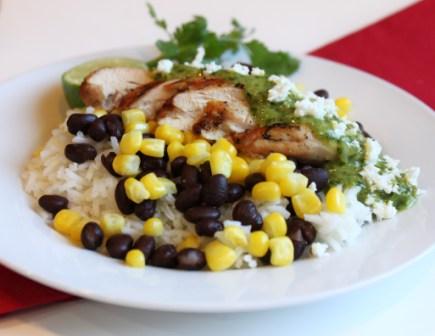
The staple of most diets here in Panama, including mine is in short supply here in Panama and will continue until improved farming methods are implemented. For a large part, Panama lacks the system and political will to find the solutions and make them happen. We have resolved outselves to throwing cheap subsidized loans at farmers hoping that they figure it out themselves.
From May 15th and for a month, 650,000 pounds of hulled rice, 650,000 quintals of unhusked rice, and 60,000 quintals of beans will be imported in the coming months.
The Licensing Committee of Tafiff Rate Quotas has made two calls for imports of corn and rice, according to the requirements of the WTO.
A total volume of 150,000 metric tons of corn has been assigned, of which 149,000 tons correspond to corn for feed and 40 metric tons is finished product, reported Panamaamerica.com.pa.
In the case of rice, the total volume of permitted imports (period 15th February to 31st March 2012) is 9711.6 tons. From 15th May to 15th June 650,000 pounds of hulled rice and 650,000 quintals of unhusked rice will be imported.
Also to be imported are about 60 million quintals of beans in the coming months, since domestic production is not able to cover the country’s consumption which is in the range of 120 million quintals for the category.
The fact that Panama is not self-sufficient in grain production, means that they have to import products like rice, corn and beans, which are essential to the basic food basket, every year.
Source: Panamaamerica.com.p

Mr. Brymer,
I have read your comments with interest. We are located in the State of Arkansas where Rice is Number 1 in the World and Corn, soybeans and cotton follows. I am presently in in semi-retirement situation here in Arkansas. I have been sent over the World as a advisor/consultant for the Dept of Agriculture and Commerce. I prepared detailed plans for a Integrated Poultry operation in Kazakstan for Chevron oil co.
I believe that I have sent you our profile in the past, because I am very interested in coming to Panama and determining a feasibility of growing rice, soybeans and vegetables. The major factors are available markets which you have implied that there is a need. Other factors is the availability of fertile and level land for irrigation, but this can be overcome with irrigation pivots. Storage facilities is another factor that should include drying, transportation, and distribution to the markets. A major concern but I believe that Panama has good road systems for the trucks to transport either to marker or to ports. Land values must be reasonable in order to sustain a profit and payoff.
I do plan to come to Panama and Ecuador in the near future.
Respectfully submitted,
Hubert Christopher
agrient@aol.com