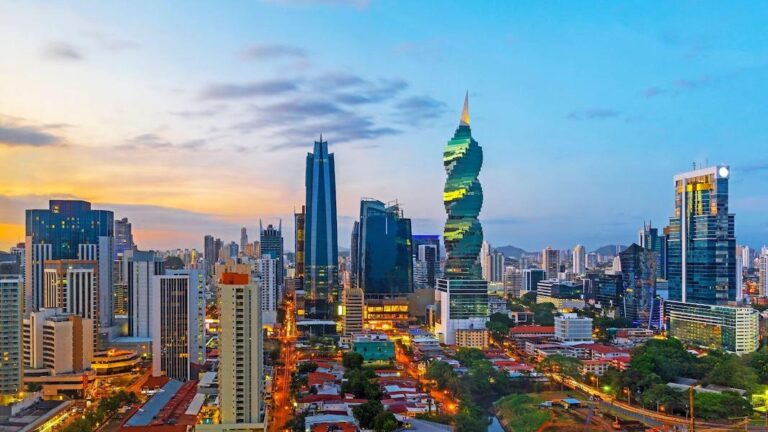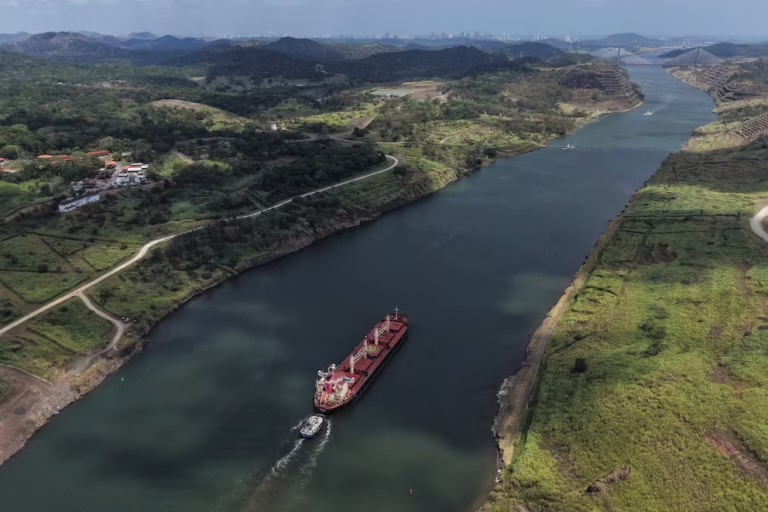
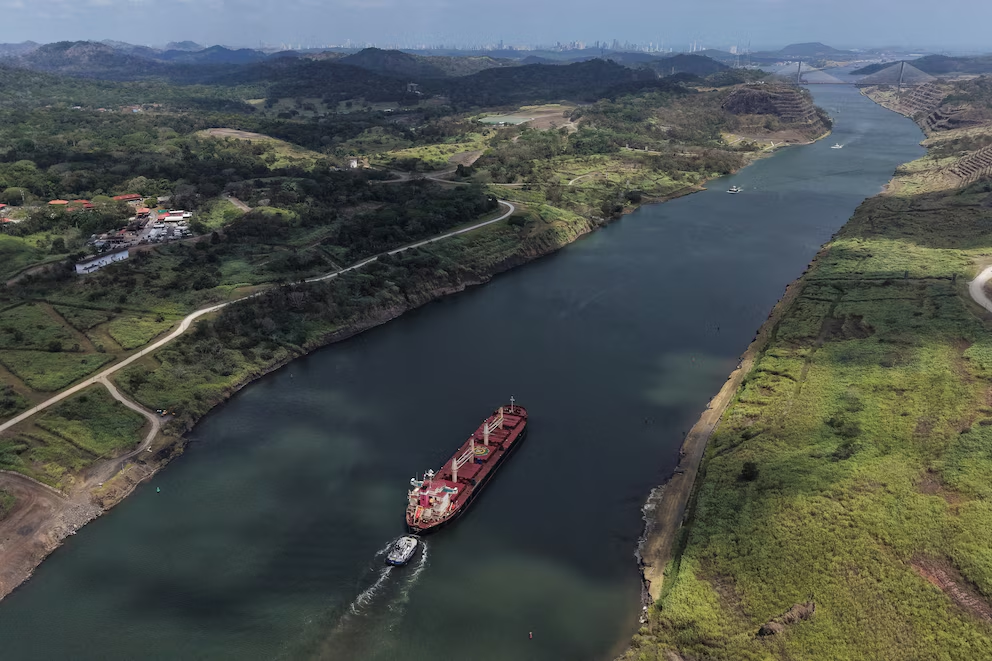
Solid Panama Canal financial performance characterized the first nine months of fiscal year 2025-2026. Official market updates presented to Bank of America Merrill Lynch by Canal Administrator Ricaurte Vásquez Morales showed toll revenues reaching $4.802 billion, representing a 17% year-over-year increase. Furthermore, net profits climbed to $3.614 billion, reflecting a 19% expansion. Consequently, strong Panama waterway revenue growth consolidates financial stability while preparing the interoceanic route for future environmental challenges.
Rising Maritime Transit Volume Propels Revenue Surges
Surging maritime transit volume drove the canal’s impressive financial turnaround. Between October 2025 and June 2026, total vessel traffic numbers reached 10,726 transits, up 5.2% compared to the previous fiscal period. Meanwhile, total cargo movement rose to 389.96 million CP/SUAB tons. Specifically, container ships and Liquefied Petroleum Gas (LPG) carriers generated the highest traffic density. Consequently, daily ship passages averaged 35 transits, confirming a complete commercial demand recovery following previous drought bottlenecks.
Preparing El Niño Climate Resilience and Draft Restriction Protocols
Despite stellar financial growth, administrators are proactively implementing El Niño climate resilience measures. Weather forecasts indicate that the probability of a severe El Niño weather phenomenon adaptation increased to 81%. Therefore, incoming administrator Ilya Espino de Marotta warned that Neopanamax vessel depth limits could be adjusted to 44 feet during the summer of 2027. Currently, authorities are applying gradual ship load capacity controls, lowering maximum draft thresholds from 50 feet down to 49 feet to ensure long-term operational predictability.
Investing in Water Conservation Infrastructure and Strategic Projects
Securing sustainable water security investments remains the primary defense against recurring dry periods. To accomplish this, the Canal Authority is advancing hydraulic basin management projects, most notably the Rio Indio reservoir project. This initiative will protect potable water supplies for over two million residents while maintaining lock operations. In addition, canal officials are advancing port terminal developments, logistics corridors, and gas pipeline projects. In conclusion, combining robust interoceanic canal financial status with preventive environmental planning ensures that the Panama Canal maintains its global trade leadership.