
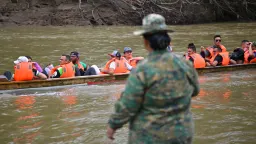
The United States government has officially committed three million dollars to support a massive Darien Gap cleanup operation along the border shared by Panama and Colombia. Due to the exponential surge in undocumented transit, this remote rainforest has suffered unprecedented damage. Therefore, Washington designed this immediate funding framework to mitigate pollution, manage trash accumulation, and restore contaminated water sources.
Deploying United States Financial Aid to Combat Pollution
Historically, local communities in the region have lacked the infrastructure to process tons of solid waste abandoned by travelers. However, the newly approved United States financial aid provides necessary technical machinery and logistics capabilities. This capital injection will directly finance local environmental brigades working alongside international conservation groups.
Furthermore, national authorities emphasized that resolving the crisis requires an integrated institutional approach. This comprehensive economic allocation serves as a baseline for wider environmental degradation relief (ecological damage mitigation). As a result, the Darien Gap cleanup (Darien jungle ecological restoration) will focus primarily on restoring fragile biodiversity hotspots that are currently facing severe ecological collapse.
Managing the Panama Migration Crisis and Regional Impact
The core necessity for this structural intervention stems directly from the ongoing Panama migration crisis. Over the past few years, hundreds of thousands of individuals have crossed the dangerous jungle corridor, inadvertently leaving a massive ecological footprint. Consequently, the pristine rivers that native populations rely on for daily survival have become heavily contaminated.
Through this targeted investment, the government intends to stabilize the region while addressing the human dimensions of the Panamanian humanitarian transit. If the pollution continues unchecked, the surrounding nature reserves could suffer permanent losses. Fortunately, this international cooperation helps strike a balance between strict humanitarian monitoring and direct environmental preservation.
Enhancing Panamanian Border Security Through Global Cooperation
In conclusion, achieving long-term sustainability requires combining ecological efforts with a robust framework for Panamanian border security. This initial budget package enhances local sovereign enforcement capabilities while protecting surrounding natural resources. Additionally, modernizing isthmus frontier management helps authorities identify illegal smuggling routes operating within protected national parks.
The international community plans to assess the initial results of this strategic cleanup framework later this fiscal year. Undoubtedly, securing the border zone remains a shared geopolitical priority for both nations. By accepting this United States financial aid (Washington economic assistance), Panama strengthens its regional leadership position, paving the way for a cleaner, safer, and more regulated border environment.