
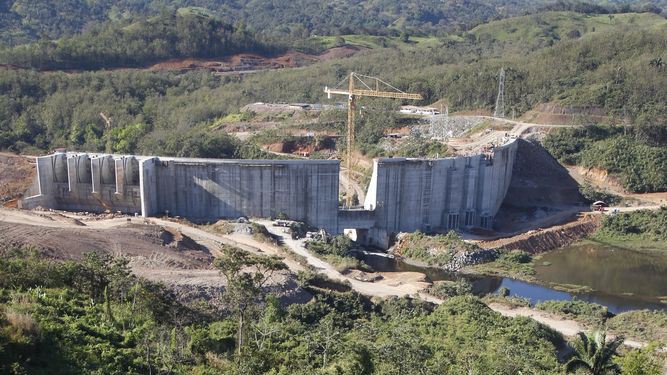
While the government insists on convincing indigenous communities to lift the blockade, the concessionaire views its investment as under threat.
EDITORIAL
Four weeks after natives and indigenous groups in the area blocked access to works on the hydroelectric project Barro Blanco, President Varela insists on dialogue – until now “deaf,” – as a mechanism to resolve the conflict, which has paralyzed work for 5 months without taking measures to affirm the rule of law and legal certainty, investment, and national development plans, in this case for energy.
“… ‘We can not continue with uncertainties. We reiterate to the Government the urgency of continuing with this previously authorized construction work in order to avoid structural and imminent risks, as well as the resolution of the pending administrative process with the Ministry of Environment ‘, said a press release issued by Genisa. ”
Prensa.com reports that “… Genisa’s request comes after President of the Republic, Juan Carlos Varela’s proposal on Thursday, July 2, to the indigenous people of Ngäbes to allow the continuation of construction of the project, located on the river Tabasará. However, he clarified that Barro Blanco would not come into operation until discussion on this topic with the communities affected has finished.
Source: Prensa.com
Panama: Government to Complete Barro Blanco
The government has told opposition sectors of its decision to finish the works on the hydroelectric station, but there are no concrete actions to meet that goal.
From a statement issued by presidency of Panama:
The High Level Commission on the issue of Barro Blanco informed the Indigenous and Country People’s Commission, in a report, of the conclusion of the first process of dialogue established at Tolé, and the decision to complete the construction of the hydroelectric project Barro Blanco, located on private land in the district of Tole, Chiriqui.
The report reiterates the need for all work related to the consolidation of the left abutment of the dam to be completed, as failure to do so would put at risk those living downstream of the project.

Native groups in Panama, Canada, and elsewhere like having modern conveniences such as electricty, cell phones, cable TV, refrigerators, cars, health care, etc. But they try to block the projects and infrastructure that makes all those good things possible. Maybe they should be more realistic, move forward, and stop clinging to the past.
It certainly looks like the commencemnt of work on this dam before the government worked out negoiations with this Indigenous people of Ngäbes is simply a pressure tactic to force the Tribe to succomb to the wishes of the government and the people who desire to build this dam for profit.
What puzzles me is that the Indigenous Tribes of Panama are a National Treasure? History that should be preserved and held close to the hearts of ALL Panamanians? In the World today, Nations are too quick to yield to big business and we find this on a large scale in America, as our Native American’s are relegated to 2nd Class status instead of being held up to all the World to see as an emblem of National Heritage instead of a National Disaster of the past.
It appears that the government of Panama has learned the wrong processes when it comes to National Heritage.