
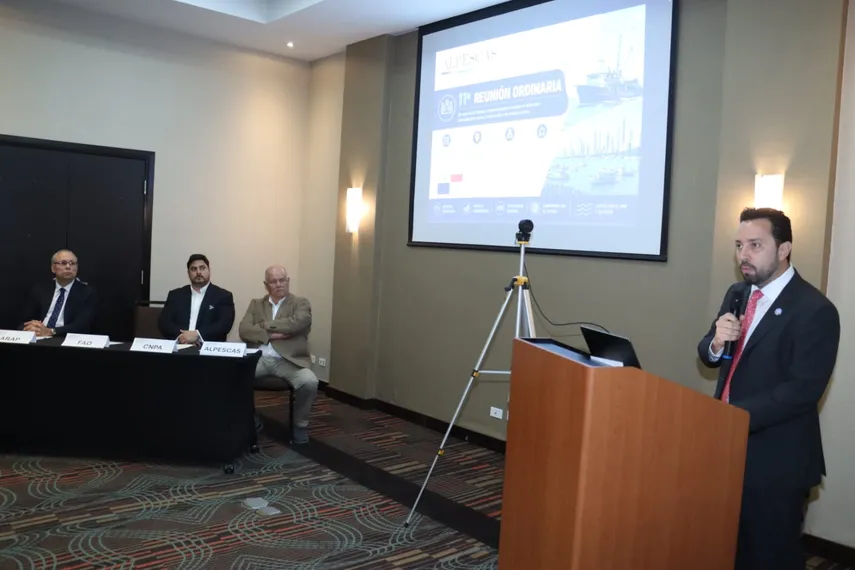
Panama has officially become the epicenter of regional maritime cooperation this week. The country is proudly hosting the 11th Ordinary Meeting of the Latin American Alliance for Sustainable Fisheries (ALPESCAS). This prestigious international event brings together prominent aquaculture industry leaders from across the continent. From June 3 to June 5, these seafood sector executives are gathering to establish new benchmarks for sustainable fisheries development across Latin America.
During the opening ceremony, national authorities welcomed delegates from various international fishing associations. Eduardo Carrasquilla, the administrator of the Aquatic Resources Authority of Panama (ARAP), highlighted the immense value of this regional summit. He explained that unified continental actions are essential to safeguard Latin American marine resources. Consequently, the event serves as a critical collaborative framework to promote responsible fishing growth and ensure long-term oceanic health.
Addressing Severe Climate Impacts on Regional Food Security
The comprehensive conference agenda addresses several immediate issues that directly threaten regional food security. Specifically, participants are analyzing the severe economic consequences of rising fuel costs on fishing operations. Furthermore, ocean temperatures continue to fluctuate drastically due to climate abnormalities. Therefore, understanding the exact effects of the El Niño phenomenon remains a top priority for these fish farming pioneers.
By reviewing recent food and agriculture guidelines from the United Nations, these decision-makers aim to protect continental nutrition safety. Local economies heavily depend on consistent marine harvesting to feed vulnerable populations. As a result, implementing modern strategies for sustainable fisheries development will help buffer coastal communities from volatile market changes and environmental crises.
Elevating Commercial Standards and Marine Conservation
Beyond immediate environmental obstacles, the summit focuses on long-term industry competitiveness. Latin American nations must rapidly adapt to strict international regulations to maintain global market access. For this reason, the assembly is evaluating the integration of official sustainable seafood certifications. Acquiring these eco-labeled fish standards will significantly improve the commercial value of regional exports in North American and European markets.
The deployment of these green maritime credentials also ensures that commercial fleets respect newly established marine protected areas. By combining commercial viability with eco-friendly seafood production practices, the sector can successfully eliminate illegal, unreported, and unregulated fishing. This systematic enforcement protects fragile regional oceanic wildlife while simultaneously building a highly resilient business model.
Driving Global Competitiveness Through Regional Alliances
Ultimately, this summit marks the beginning of a progressive era for Latin American seafood production. ALPESCAS, which comprises the leading commercial fishing chambers of the Americas, continues to demonstrate that collaboration yields excellent results. When nations share technical data, they actively accelerate the adoption of viable marine harvesting techniques worldwide.
As the meeting concludes, technical committees will formulate the “Panama Agreement” protocols to formalize these regional commitments. These updated safety and conservation measures will soon be presented to international maritime bodies. Through these continuous, structured efforts, regional authorities are successfully paving the way for long-term sustainable fisheries development.