
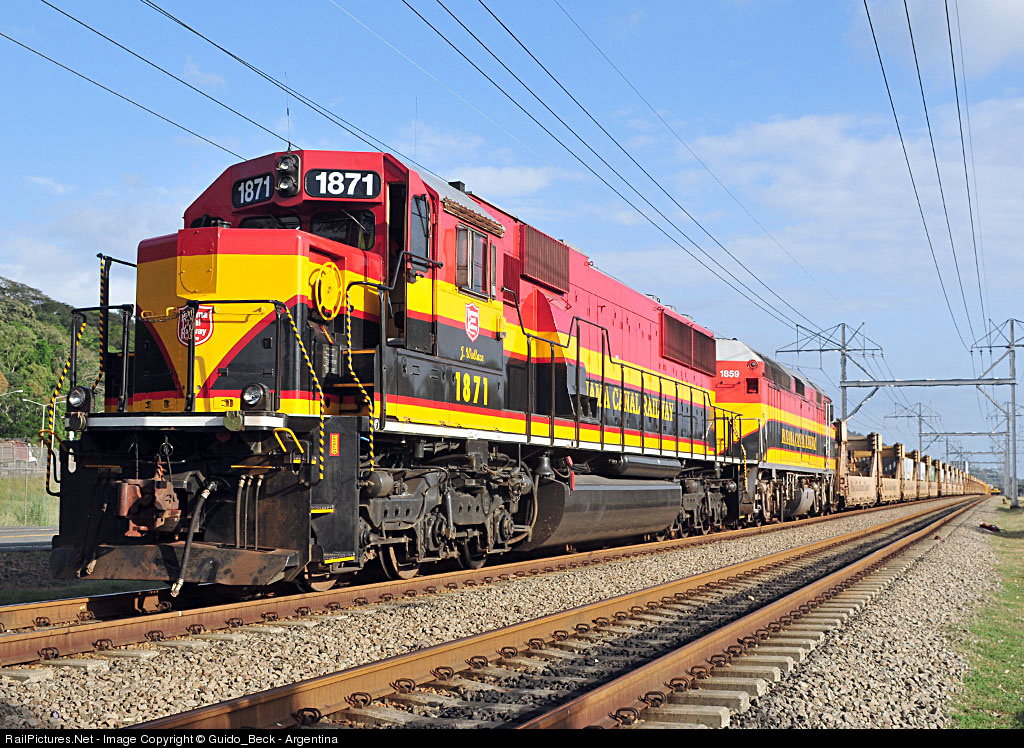
The rail transport system that would cover a 390 km distance and whose construction would last six years, contemplates in the future a possible expansion towards the border with Costa Rica.
China Railway Design Corporation worked with several Panamanian companies that supported the economic, geotechnical, soil, capacity and demand analyses of the Panama-David train feasibility study.
Engineer Oscar Ramirez, president of the High Level Commission named by President Varela to coordinate the study, explained that “… the proposal is to build an 8-car passenger and freight train line, with capacity for about 750 passengers, with 21 stops on a 391.3 kilometer stretch, which would cross by land, tunnels, and bridges the provinces of Panama, Cocle, Herrera Veraguas, and Chiriqui.”
The train would reach 160 kilometers per hour for passengers and 80 kilometers per hour for the freight train, resulting in an estimated travel time between Panama and the city of David of 2.5 hours. It is estimated that the construction stage of this mega infrastructure work would last 6 years, in which up to 6,000 direct and indirect jobs would be created, while for the operation and maintenance will require about 2,900 people, explains a statement from the Presidency of Panama.
Panamanian President Juan Carlos Varela said that “… The system would provide a much more efficient passenger mobility system and unprecedented integration in the country and will enhance the country’s logistics platform by strengthening our logistical, air, maritime and financial connectivity with the region.”
Varela added that “… the study contemplated a possible expansion to Costa Rica in the future, which would complement the Central American economies and facilitate the commercialization of products among our countries, which have great logistical challenges.”

The Chinese are not offering this railway as a development aid, rather as a business venture for which they expect full repayment and commercial interest rates. Chinese projects often use Chinese labourers and materials. Local supplies are “unreliable”. A Chinese built railway from the port of Mombasa Kenya (metro pop 3 million) to Nairobi (metro pop 6.5 million) was completed a few years ago. Loan repayments will soon become due and stretch over 30 years. Consultants reported the project needed 20 to 50 million tons (who would start a project with that disparity in numbers?) of traffic a year to carry its debt. Optimists believe the railway will only handle 14 million tons in 2019. This project has the capacity to become a major millstone around the neck of the Panamanian people.