
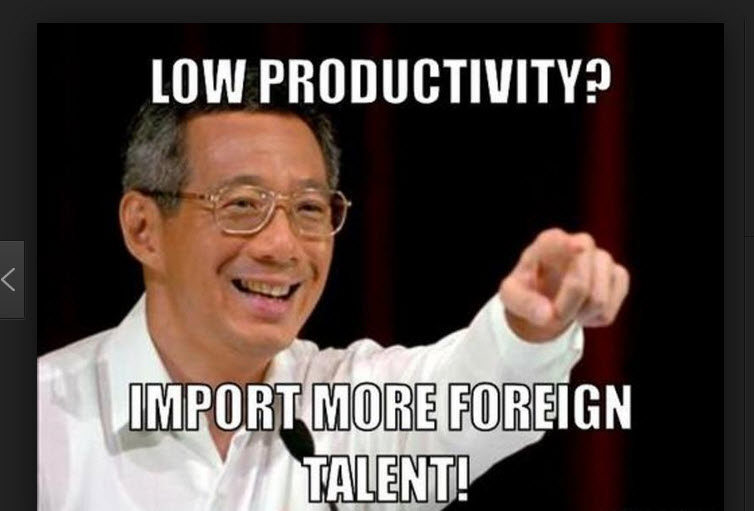
Come on, this is not that difficult to figure out guys. While in the long run, education will help but the way things happen here, or do not happen here, that is a generational change that needs to take place. Any top talent that works here is paid peanuts so they go to other places to work. I was going to have my son specialize in hospitality management and come back here to work. He would be paid 25% of what he could earn in the US.
Gaps in GDP per capita between different countries are directly related to the productivity gaps between their respective economies, with education being the main factor in these differences.
The OECD report “Promoting inclusive growth of productivity in Latin America” ??says that although the region made progress in reducing poverty over the past 20 years, it still stands out at the global level, because of the unequal income its inhabitants.
Five areas are identified in which key reforms need to be made to correct the poor productivity of the region: human capital, labor market, business environment, innovation and infrastructures
The location of human capital at the top of the list, clearly indicates its importance and consideration as the basis of the problem: “… investing in education, skills and lifelong learning will be essential in improving labor productivity and expanding economic opportunities.”
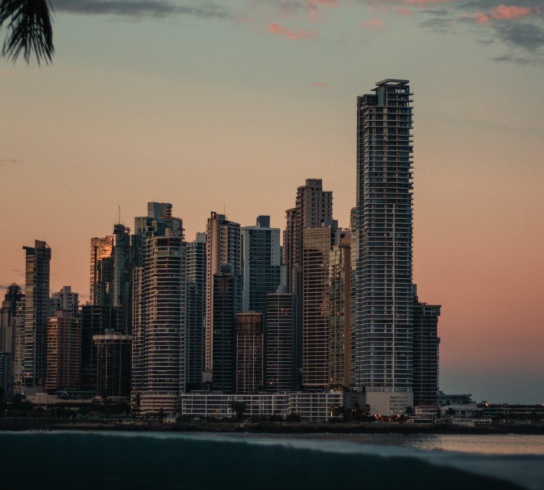
Tom, I agree that GDP is directly related to productivity. Productivity is the only way to increase real wealth in an economy with a relatively fixed population. However, the answer is not better education, although, of course, it would help in many ways. Rather the simple solution you are looking for is not difficult to find. Simply look at Hong Kong (HK) as, arguably, the most successful economy in your lifetime.
Hong Kong stands out because it prospered under some simple rules, none of which apply in Panama today: sadly they will not be allowed to apply tomorrow either..
Hong Kong had about the same population in 1970 as Panama has now. But it had a low fixed tax rate, especially for personal tax, a small government which spent less than ten per cent of GDP, and most importantly a strong judiciary and rule of law with private property and open competition being well protected, all helped along by genuine free trade. The populations, e.g., of both Russia and India are well educated, but they do not increase productivity very much.
The Panamanian govt. is way too large. It should copy the way HK did it. It will work. Panama shares with HK a role as an important shipping port, a strong financial and banking base, and a free trade zone: HK was totally free trade. HK was never a democracy, just as the US Founding Fathers never intended USA to be a democracy. The poor will always vote for the middle class and property owners to be taxed to pay benefits to the poor.
Politically, Panama is incapable of changing to copy HK. Panama is destined to remain as just another middling country: a poor, corrupt, high tax, lawless, high tariff, big government latino country, but may be with a well educated population.
Latest GDP for HK is near $35000 per person: Panama’s is near one quarter of this number for nominal GDP.