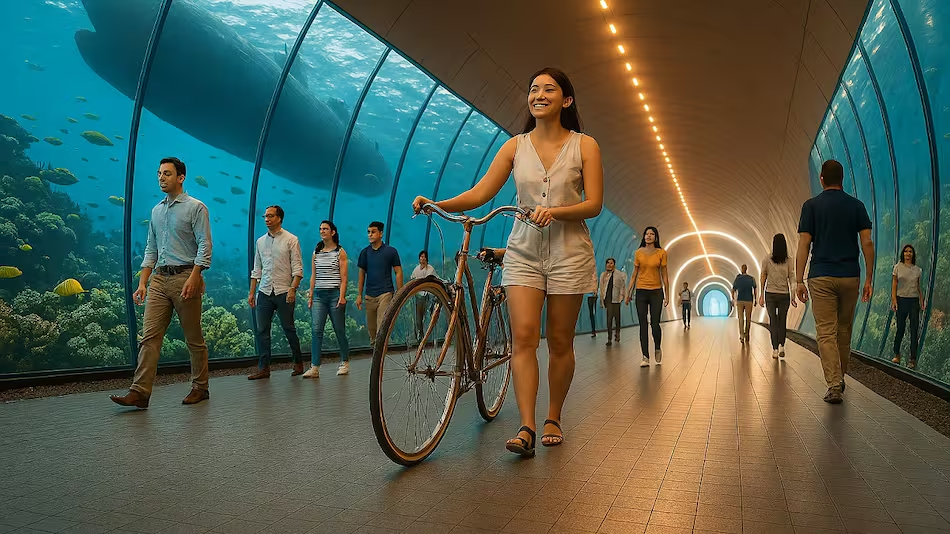
The Canal Underline has emerged as a groundbreaking concept in modern urban planning. This innovative underwater tunnel project aims to provide a unique way for people to cross the Panama Canal, either on foot or by bicycle. By creating a direct, accessible, and efficient passage, the proposal seeks to enhance connectivity without disrupting the essential maritime traffic that defines this historic waterway. It represents a bold step forward in how cities integrate large-scale infrastructure with human-centered mobility.
Furthermore, this subaquatic crossing project is not merely about transportation. It is designed to act as a catalyst for urban development, offering residents and tourists a predictable alternative to traditional bridge traffic. As cities across the globe strive to improve the quality of life for their inhabitants, this initiative positions Panama as a vital laboratory for exploring bold architectural ideas.
Transforming Mobility with Modern Infrastructure
At its core, the Panama Canal tunnel proposal addresses the challenges of fragmented urban environments. By focusing on pedestrian mobility, the design encourages a shift toward more sustainable modes of transport. This walkable infrastructure would allow users to traverse the canal in a safe, climate-controlled environment, independent of surface traffic conditions. Additionally, the project is designed to be highly reliable, ensuring that the daily commutes of thousands are no longer dependent on the variability of bridge capacity.
Engineers involved in this vision are carefully evaluating how to implement a secure underwater passage that meets international safety standards. This requires balancing complex technical requirements with the goal of creating an enjoyable experience. Whether commuters are walking to work or cyclists are enjoying a recreational ride, the integration of such a facility would significantly enhance the regional network.
Urban Innovation and the Future of Panama
The potential impact of The Canal Underline extends well beyond the immediate convenience of a faster commute. As a piece of urban innovation, it challenges the traditional perception of how natural barriers can be navigated. By turning a historic divide into a functional connection, the city can promote a more cohesive social and economic experience. The development of such a modern engineering solution reflects a commitment to rethinking public space in a way that serves the population directly.
Ultimately, while the project remains an ambitious vision in the evaluation phase, its implications for the future are clear. The successful realization of this bicycle crossing could set a new benchmark for how countries approach infrastructure and sustainability. By prioritizing the needs of people alongside major industrial routes, the proposal underscores the potential for creating truly connected, forward-thinking cities.