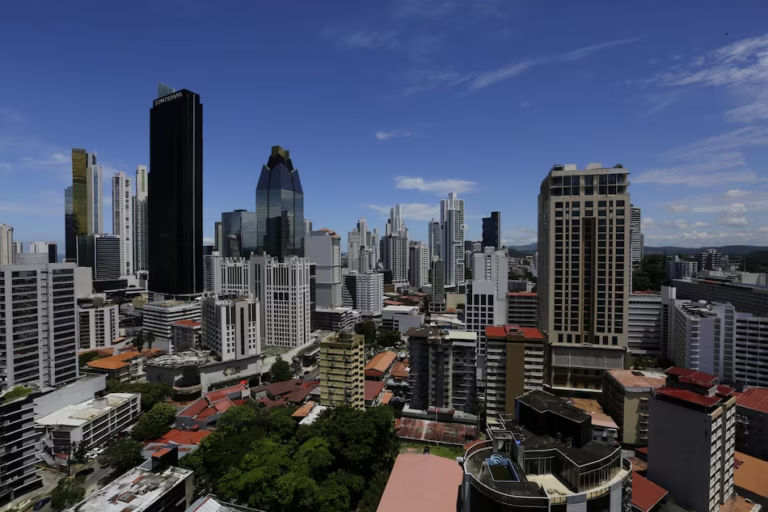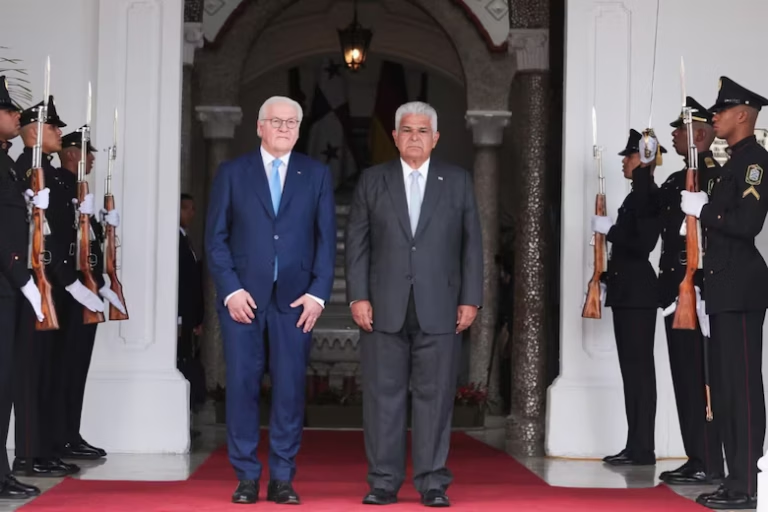

The government of Panama has recently intensified its efforts to align national policies with the Panama UN 2030 Agenda. This ambitious framework serves as a roadmap for the country to achieve prosperity while protecting the planet. By focusing on the UN 2030 vision, the nation aims to eliminate poverty and bridge the gap between different social sectors. Consequently, authorities are integrating these global objectives into the heart of their legislative and economic strategies.
Prioritizing Sustainable Development and Eco-Friendly Growth
A major pillar of the current strategy is the promotion of sustainable development. Panama recognizes that green progress is no longer optional but a necessity for surviving in a competitive global market. Therefore, the administration is launching new initiatives to support clean energy and responsible resource management. These actions ensure that the country’s eco-friendly growth benefits both current and future generations.
Shutterstock
To achieve these targets, the government is collaborating with private sectors. Because collaboration is essential for success, several public-private partnerships have been formed to fund infrastructure projects that meet high environmental standards. This global commitment is visible in the way the country handles its urban planning and agricultural expansion.
Enhancing Social Inclusion and Climate Resilience
In addition to economic growth, the Panama UN 2030 Agenda emphasizes social inclusion. The goal is to ensure that community equity reaches the most vulnerable populations, providing them with access to education and healthcare. By focusing on poverty reduction, Panama is building a more resilient society that can withstand economic fluctuations.
Furthermore, climate resilience has become a top priority due to the country’s unique geographical position. Increasing environmental stability through reforestation and coastal protection is vital for the long-term viability of the Panama Canal. As a result, the government is investing heavily in disaster preparedness to mitigate the effects of extreme weather events.
Ensuring Institutional Transparency and Accountability
Finally, the success of these programs relies on institutional transparency. Without high levels of public accountability, the 2030 goals would be difficult to reach. The administration is implementing digital tools to improve government integrity and ensure that resources are used efficiently. In conclusion, the Panama UN 2030 Agenda represents a transformative opportunity for the nation to lead by example in the region.
About the Author