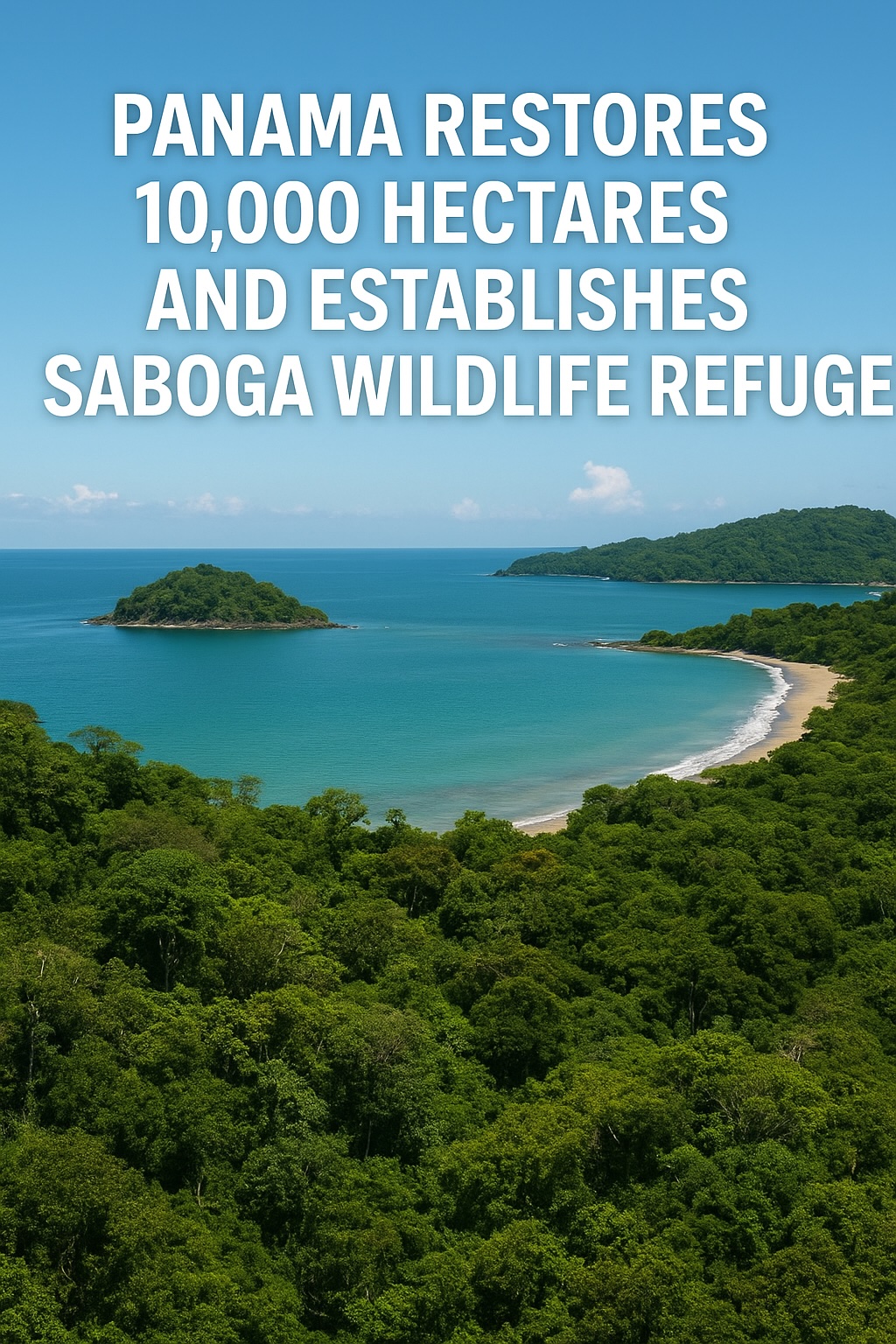
Panama has reinforced its dedication to environmental conservation through two major initiatives. First, as part of the “Pact of Panama with Nature,” the government committed—with technical and financial support from FAO—to restore 10,000 hectares of degraded ecosystems by 2035. The restoration program will focus on arid regions like the Azuero Peninsula and biologically rich areas such as Darién, aligning ecosystem recovery with sustainable agro?food systems and community development.
At the same time, Panama has officially created the Saboga Wildlife Refuge, covering approximately 8,298 hectares(81.884?km² marine area + 1.097?km² island area) in the Archipelago of Las Perlas (district of Balboa). This new protected area safeguards critical habitats for nesting marine turtles—hawksbill, green, leatherback and loggerhead—as well as hammerhead sharks, humpback whales and the endemic sabogana boa. The initiative builds on cooperation between local communities, NGOs and government agencies including the National Aquatic Resources Authority (ARAP) and National Aeronaval Service (SENAN).
Strategic Goals and Impact
Both initiatives reflect Panama’s integrated environmental strategy. The ecosystem?restoration target uses degraded land data showing a 4% forest?cover loss within two years (352,873 hectares) to guide investment in nature?based solutions. Meanwhile, the Saboga Refuge advances Panama’s marine conservation agenda, promoting ecotourism, education and local community engagement in sustainable resource management.
Regional Leadership in Conservation
By combining large?scale restoration and the establishment of a key protected area, Panama positions itself as a regional leader in biodiversity protection and ecological resilience. These efforts reinforce the country’s role as a key actor in Latin America’s commitment to restoration, marine?terrestrial integration and sustainable development.
About the Author

I love it, this is one aspect of Panama that really impresses me! ?