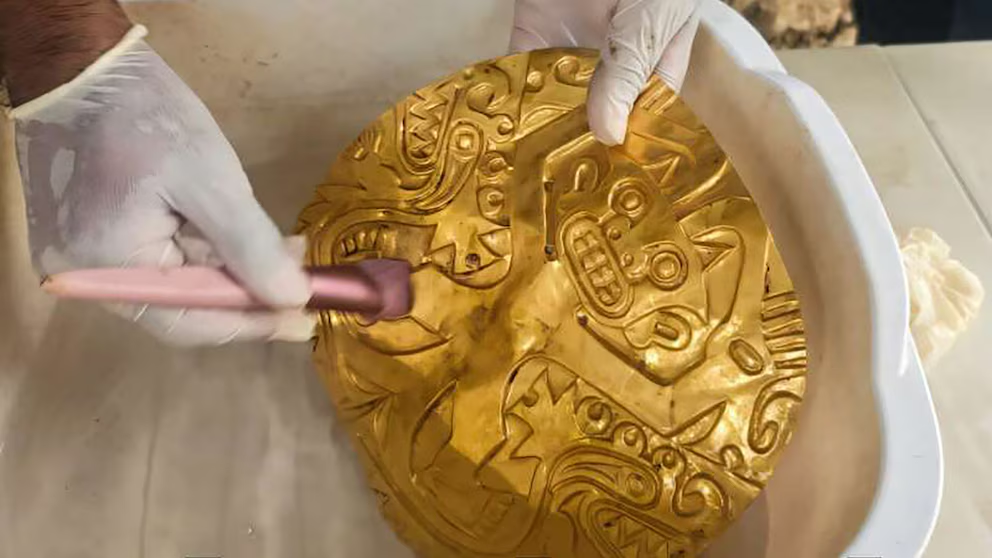
Archaeologists recently announced a groundbreaking archaeological discovery in Panama that has stunned the scientific community. During excavations at the El Caño Archaeological Park, experts revealed a massive Panama Golden Tomb belonging to a high-ranking lord. This ancient burial site dates back approximately 1,200 years, offering a rare glimpse into the wealth and power of the region’s ancestors.
The Wealth of Ancient Gold Artifacts
Inside the pre-Columbian funerary chamber, researchers found a breathtaking collection of ancient gold artifacts. The treasure includes pectorals, gold beads, and intricately crafted bracelets that reflect the high status of the deceased. These pieces of pre-Hispanic jewelry demonstrate the incredible craftsmanship of the Gran Coclé culture. In addition to the metalwork, the site contained numerous ceramic vessels painted with complex mythological scenes.
Furthermore, the quantity of the find suggests that the indigenous Coclé civilization possessed a highly organized social hierarchy. Because the “Lord of El Caño” was buried with such opulence, historians believe he held significant political and religious influence over the surrounding territories.
Understanding Pre-Columbian Burial Customs
The layout of the tomb provides essential data regarding pre-Columbian burial customs. In many ancient funeral traditions, powerful leaders were not buried alone. In fact, this Central American historic find reveals that several individuals were sacrificed to accompany the lord in the afterlife. This practice was a common element of the social structure during that era.
As archaeologists continue to clean and categorize the objects, they expect to find more details about daily life. Therefore, the Panama Golden Tomb is not just a treasure chest; it is a historical record. Every ceramic fragment helps reconstruct the narrative of a society that thrived long before European contact.
Preserving the Gran Coclé Culture Legacy
This recent archaeological discovery in Panama reinforces the importance of protecting heritage sites from looters. By studying the Gran Coclé culture through scientific methods, we ensure that the story of these people remains accurate. The government of Panama has already pledged more resources to expand the research area at El Caño.
In conclusion, the unearthing of this Panama Golden Tomb marks a milestone for global archaeology. As we analyze these ancient gold artifacts, we come closer to understanding the complex spiritual and social world of the pre-Columbian era.
About the Author