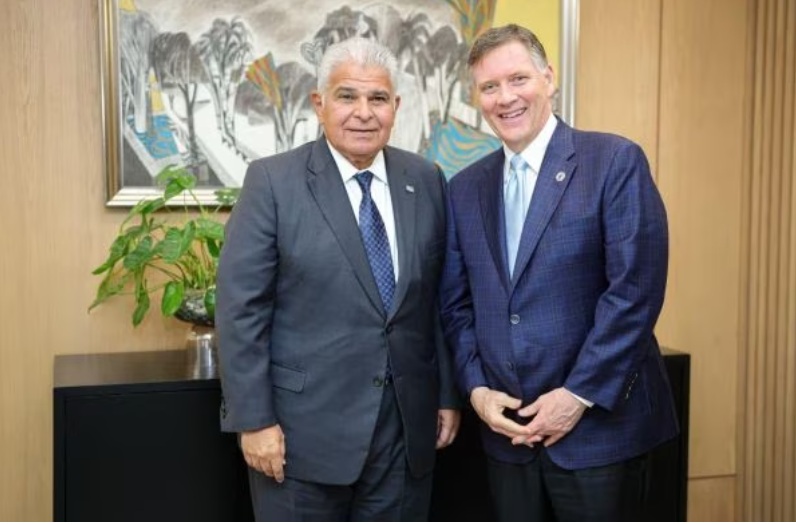
Panama is focusing heavily on its role as a crucial global trade hub. President José Raúl Mulino recently convened a high-level meeting with Governor Brian P. Kemp of the state of Georgia, United States. Governor Kemp’s visit was part of a dedicated economic development mission centered primarily on enhancing logistics infrastructure and supply chain operations at the Panama Canal. This bilateral discussion underscores the strategic importance of Panama Canal Logistics to the entire international commerce system. The meeting included key Panamanian officials, notably the Minister for Canal Affairs and the Administrator of the Canal, as well as the First Lady of Georgia.
The delegation accompanying Governor Kemp featured prominent figures from the Georgia Ports Authority (GPA), specifically the CEO and the Chairman of the Board. This group manages the major US East Coast Ports of Savannah and Brunswick, which are highly impacted by Panama Canal traffic. Indeed, these ports play a central, prominent role in world trade.
Strategic Importance of US-Panama Trade and Georgia Port Operations
The economic ties strengthened by US-Panama Trade are evident in maritime traffic statistics. For example, the Port of Savannah ranks as the second-largest destination for container ships measured in long tons of cargo transiting the Panama Canal. To illustrate, this port handled 6.5 million long tons of cargo in the fiscal year 2025 alone. Moreover, Savannah is the second-largest container port on the US East Coast, managing an approximate volume of 5.7 million TEUs (Twenty-foot Equivalent Units) in the same period.
This port’s advanced infrastructure and robust connectivity make it a principal gateway for US agricultural exports. In addition, the Brunswick Port is the country’s leading hub for Roll On Roll Off (RoRo) vessels. RoRo is a specialized shipping method providing significant advantages for moving vehicles and industrial machinery. Therefore, the discussions about Canal Operations and its alignment with Georgia Port Operations are essential for securing the smooth flow of the Global Supply Chain.
Enhancing Canal Infrastructure for Future Shipping Capacity
The core focus of the mission was to address topics related to Logistics Infrastructure and the operations of the shipping and distribution network. The involvement of the Georgia Ports Authority highlights the immediate operational concerns shared by both nations regarding the Panama Transit Route. The continued cooperation between Panama and the US aims to optimize the Canal Infrastructure, ensuring it can meet the rapidly increasing demands of international commerce.
Panama’s commitment to improving its national governing ability and strengthening its role in the global shipping system is clear. This ongoing dialogue is a vital component of the state financial system upgrade. Consequently, the goal is to make the management of this crucial waterway as efficient as possible. By improving Canal Modernization and maximizing its shipping capacity, both nations are working together to enhance the overall Global Supply Chain resilience. This shared objective ensures that bilateral commerce continues to thrive. Ultimately, strategic investment in Canal Infrastructure will secure Panama’s position as a dependable Global Supply Chain facilitator for decades to come.
About the Author