
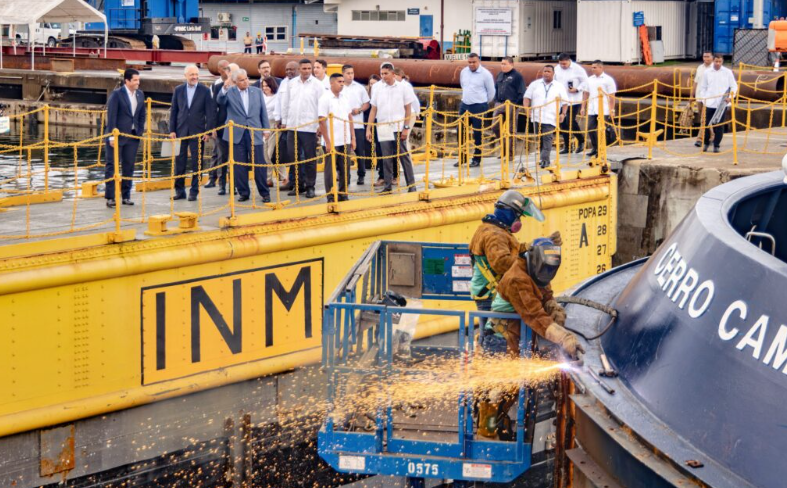
The Panama Canal Authority (ACP) has officially delivered its direct Panama Canal contributions to the Republic of Panama for the fiscal year. This historic payment represents the interoceanic waterway payments derived from the surplus, fees for services, and per-tonnage rates. By transferring these significant public funds, the Canal reaffirms its role as the primary engine of the country’s wealth. These funds are essential for the government to finance social programs and infrastructure projects across the nation.
Boosting the National Treasury and State Coffers
The delivery of funds to the National Treasury demonstrates the Canal’s commitment to the Panamanian people. Despite global challenges in maritime trade, the waterway managed to optimize its revenue streams. This record-breaking fiscal contribution is a result of meticulous management. Furthermore, the increase in sea commerce through the Neopanamax locks has allowed the administration to send more resources to the state coffers than in previous decades. This financial strength ensures that the National Treasury can support long-term development goals.
Economic Impact of Interoceanic Waterway Payments
The economic impact of these payments cannot be overstated. When the Canal performs well, the entire Panamanian economy feels the financial influence. During the last fiscal year, the administration focused on maximizing the value of the route. Consequently, the Panama Canal contributions have surpassed initial budget projections. This surplus provides a safety net for the country’s economy, allowing for better management of public funds during periods of global market volatility.
Operational Efficiency and Global Shipping
Maintaining logistics excellence is key to generating these high returns. The Canal’s operational efficiency remained high even when facing climate-related water level challenges. By prioritizing functional performance, the ACP ensured that global shipping companies continued to choose Panama as their preferred route. This reliability directly translates into higher interoceanic waterway payments. As the Canal continues to innovate, its economic impact will likely grow, further cementing its status as a pillar of international maritime trade.
Future Outlook for Public Funds
Looking ahead, the goal is to sustain these Panama Canal contributions through sustainable water management. The relationship between the Canal and the National Treasury remains a model of how a state-owned enterprise can drive a country’s prosperity. By investing in new technologies, the Canal ensures that its fiscal contribution remains steady. Ultimately, every ship that crosses the isthmus contributes to the state coffers, benefiting every citizen in the Republic.
About the Author