Screenshot
Panama Busan Route Opened via Maritime Cooperation Agreement
Panama has entered into a maritime cooperation agreement with South Korea to establish the new Panama Busan route, formally signed between Panama’s Authority of Maritime Affairs and Busan Port Authority. This Panama-Busan trade link aims to deepen bilateral collaboration, especially in areas such as descarbonization, digitalization, and port efficiency. The agreement reflects a shared vision for a port sustainability initiative that aligns with global environmental standards.
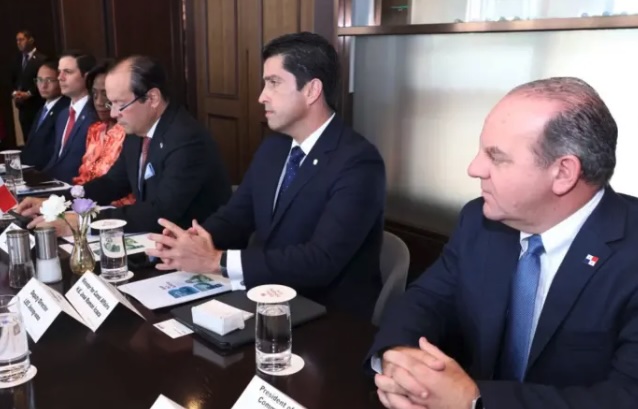
The foreign minister of Panama, Javier Martínez-Acha Vásquez, oversaw the signing, alongside Luis A. Roqueber (from Panama’s maritime authority) and Song Sang-Keun (director of Busan Port). Their efforts mark a new chapter in port cooperation pact between the two nations.
What the Agreement Includes: Port of Busan Collaboration & Green Port Strategy
Under this agreement, the two parties will exchange best practices for operations, try out innovations that reduce carbon emissions, and adopt digital tools to streamline port procedures. Key components of the port sustainability initiative include monitoring emissions, introducing cleaner fuels, and improving terminal operations. Busan’s performance as one of the most active container hubs will serve as model for Panama’s infrastructure upgrades.
Busan, ranked as the fifth busiest container port globally, handled about 22 million TEU in 2019, which highlights its impressive operational scale. This Busan port cooperation aims to transfer knowledge and technology so Panama can learn from those standards of efficiency.
Trade Route Expansion & Strategic Benefits
Expanding the shipping corridor with the new Panama-Busan route offers substantial gains. First, it enhances logistic capacity for Panama, providing more direct access to East Asia. Second, trade route expansion means better flows of imports and exports, with potential to reduce costs and transit times. Third, the partnership fosters stronger bilateral ties, and may attract investment in maritime infrastructure.
Broader Impacts: Naval Partnership Pact and Sustainable Growth
The maritime cooperation agreement is more than a symbolic naval partnership pact. It represents a step forward in international cooperation, especially in sustainability, digital transformation, and efficiency. For Panama, this brings opportunities for economic growth in the maritime sector, possibly raising competitiveness and improving environmental compliance. Ultimately, the green port strategy embedded in the deal could place Panama among global leaders in sustainable port operations.
About the Author