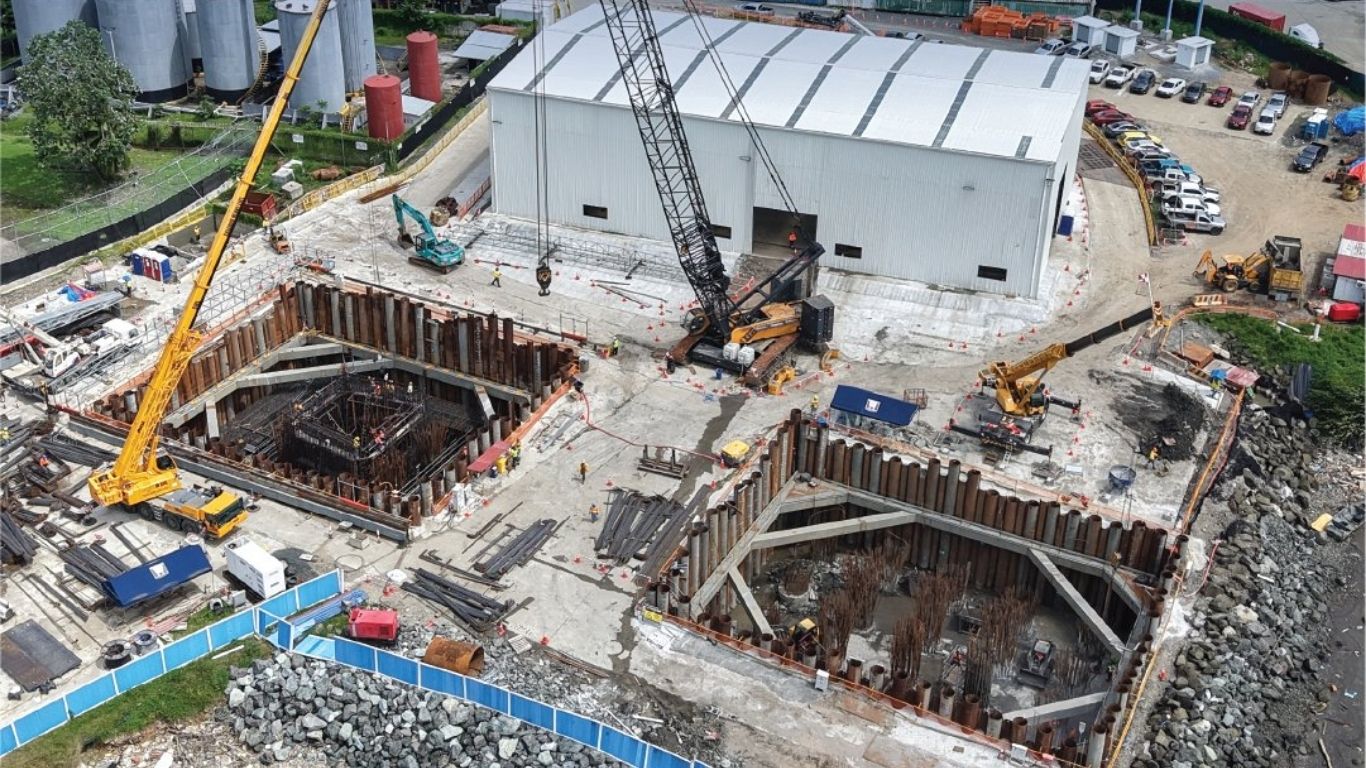
The massive Fourth Bridge project over the Panama Canal has officially entered one of its most critical technical stages. This week, the Ministry of Public Works (MOP) and the Panama Fourth Bridge Consortium announced the start of the concrete pouring phase for the East Main Tower. This structural landmark represents a significant leap forward for Panama infrastructure update efforts, aiming to alleviate traffic congestion for over 70,000 daily commuters.
Main Tower Construction: Anchoring the Future
The main tower construction is a feat of modern engineering. Standing as a central pillar of the cable-stayed design, the East Tower requires specialized high-resistance materials to ensure longevity. During the primary pylon assembly, engineers must manage precise environmental conditions to ensure the structural integrity of the casting of structural elements. Consequently, this phase is monitored 24/7 to guarantee that the New Panama Canal bridge meets the highest international safety standards.
Panama Infrastructure Update and Economic Impact
This regional transport development is more than just a road project; it is a catalyst for economic growth. By improving trans-isthmus connectivity, the bridge will drastically reduce travel times between Panama City and the West Panama province. Furthermore, the integration of this bridge with the future Metro Line 3 underscores a comprehensive approach to urban mobility. As the cross-canal transit becomes more efficient, the logistics and commercial sectors are expected to see a boost in operational speed.
Future Stages of the Fourth Bridge Project
Looking ahead, once the East Tower reaches its planned height, the focus will shift to the western section of the canal. The Fourth Bridge project serves as a testament to the country’s engineering ambition. While the concrete pouring phase continues, secondary access roads and bridge ramps are also being prepared. In conclusion, the progress of this New Panama Canal bridge ensures that Panama remains a global leader in maritime and terrestrial logistics throughout 2026 and beyond.
About the Author