Screenshot
Panama has proudly added the Colonial Route Panama—also called the Panama colonial path—as its sixth UNESCO World Heritage site. Moreover, this Transisthmian heritage route spans key colonial-era sites, recognising their value as a historic corridor of interoceanic trade and Panama’s deep cultural legacy.
What Is the Colonial Route Panama?
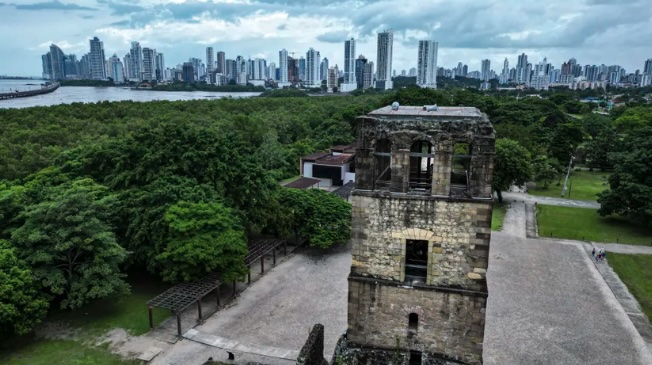
The Colonial Route Panama connects the Pacific and Caribbean coasts via Camino Real, Camino de Cruces, Panama Viejo, Casco Antiguo, and the Portobelo–San Lorenzo fortifications. Additionally, this network served as a major historic trade corridor between the 16th and 19th centuries.
UNESCO World Heritage Recognition
In July 2025, UNESCO inscribed the route under criteria (ii) and (iv), recognising its outstanding universal value. Consequently, this new UNESCO World Heritage site joins five existing ones in Panama.
The Route’s Historical Significance
As a historic trade corridor, the route enabled Spanish galleons to transport New World goods—silver, spices, porcelain—across the isthmus. Furthermore, it laid the groundwork for the interoceanic canal and shaped Panama’s identity as a global crossroads.
Strengthening Panama’s Cultural Legacy
Moreover, recognising this Panama cultural legacy boosts tourism, conservation, and heritage education. Ultimately, local communities around Panama Viejo, Casco Antiguo, and Portobelo gain new incentives to safeguard and interpret their shared past.
More Panama Articles
About the Author